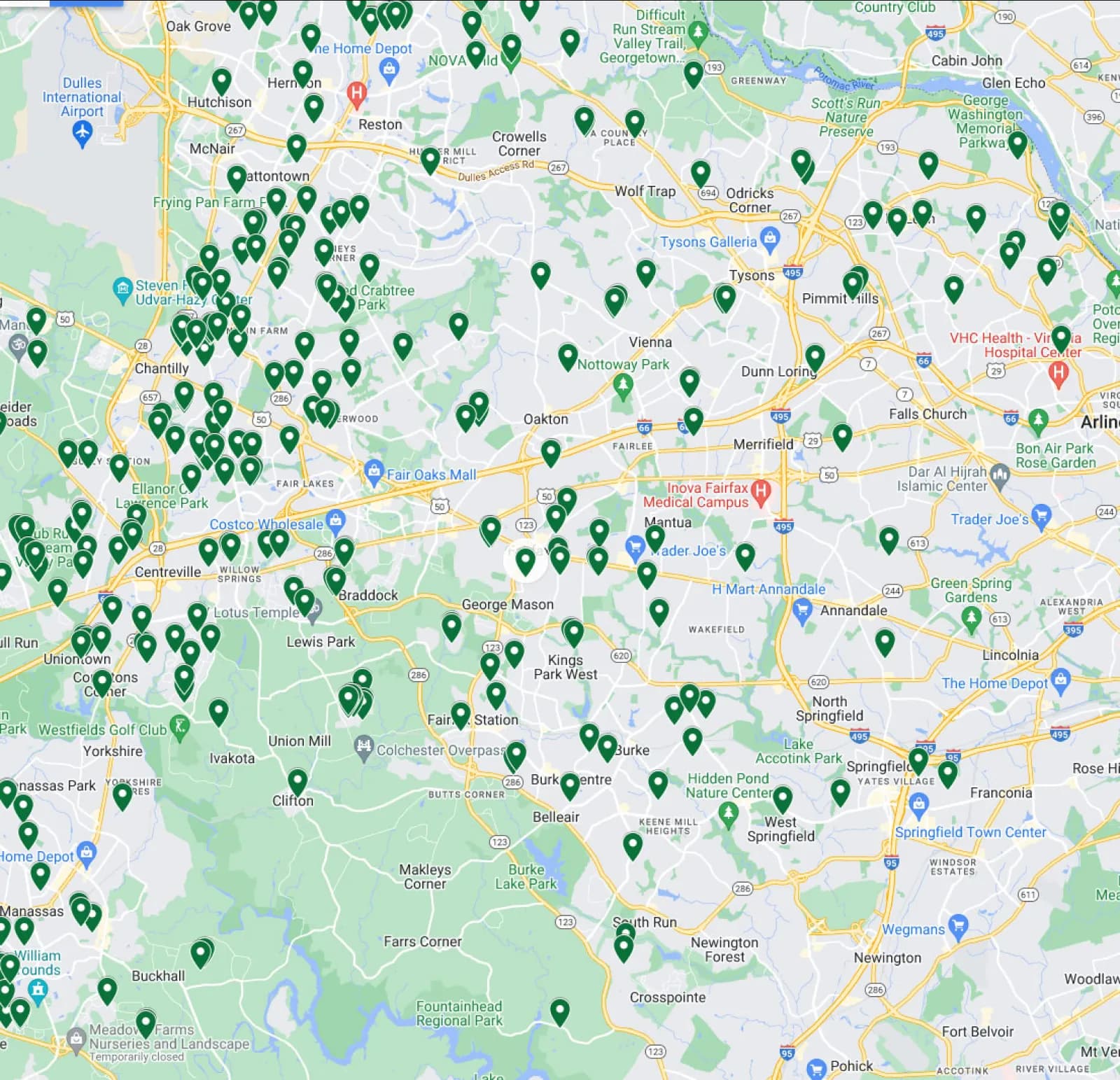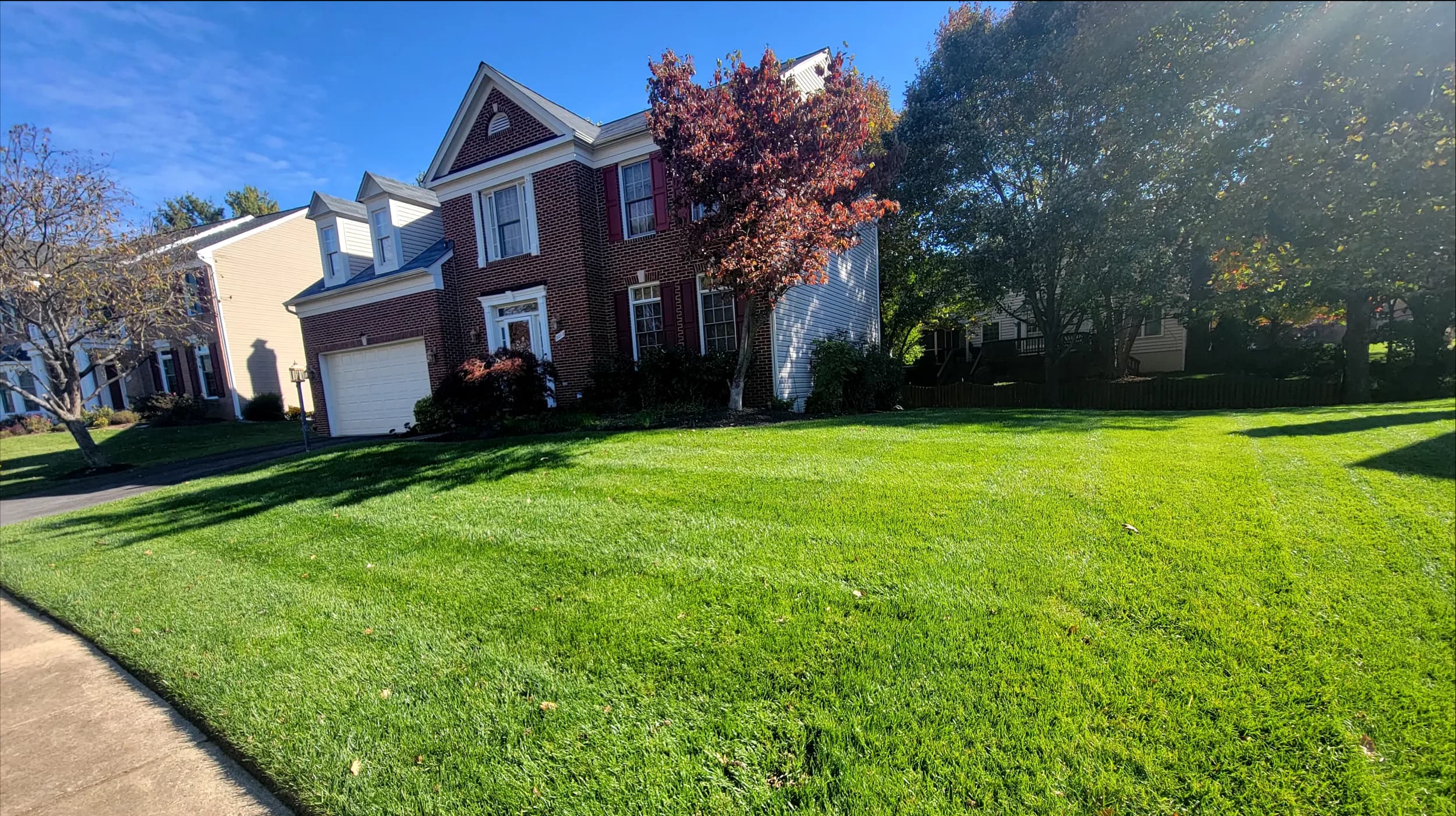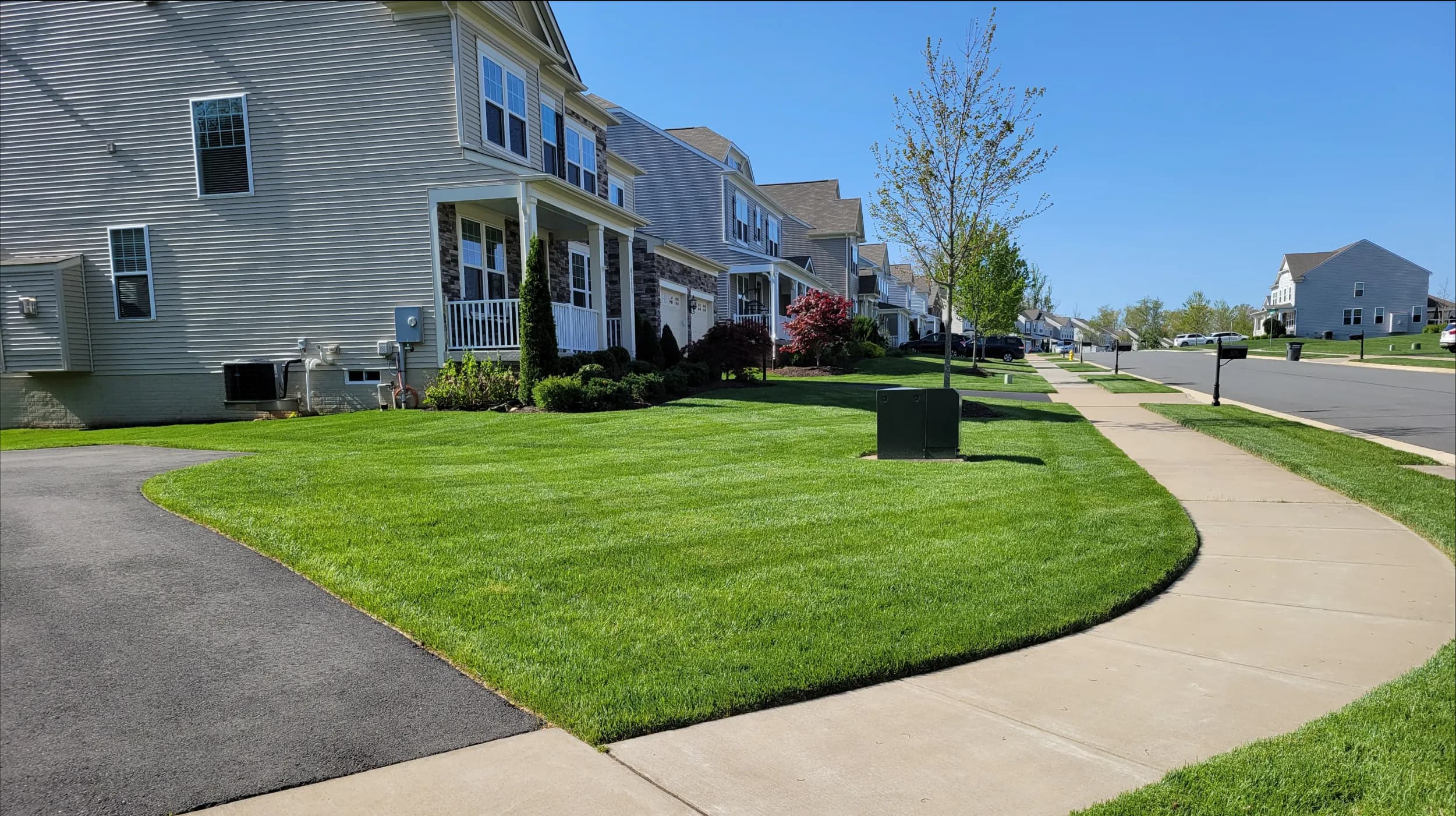
Simply Turf, based in Gainesville, treats lawns in the City of Fairfax and the surrounding county with fertilization, weed control, aeration and overseeding, compost topdressing, and mosquito and tick control. We don't mow and there are no contracts, and most work here is renovation since these are the oldest lawns on our map.
What makes an older Fairfax lawn harder to fix?
Age is most of it, since clay under decades old turf compacts so slowly that nobody notices. Oaks and maples planted as saplings have grown into a full canopy, and their roots take the top few inches of soil that tall fescue needs, so a strip can thin every summer no matter what you spread. Rule that out before treating summer brown spots as disease. It's common in Mantua, Mosby Woods, and Kings Park West.
Soil work comes before seed.
On a lawn this settled, seed is the last step. Core aeration and overseeding pulls plugs through compacted clay so seedlings root into an open channel, from late August through October, because spring seedlings can't survive their first July. Clay packed for thirty years also needs organic matter, and compost topdressing adds it, feeds the soil and helps it hold water and nutrients.
How long does it take to bring a tired lawn back?
Plan on two to three growing seasons. Tall fescue is the most shade tolerant cool season grass we have, but it needs four or more hours of light, and under a closed canopy a bigger mulch bed beats reseeding every fall. We make the same call in Reston under its deep canopy and in the newer soils of Centreville.
- In year one the weeds drop, feeding goes on schedule, and one solid fall aeration and seeding lands
- In year two the lawn visibly turns as the first year's seedlings hold and the second seeding fills in
- By year three it's maintenance only
Weeds find the thin spots first.
Every weed problem in an old lawn is a density problem, because weeds move into thin spots first. Our lawn weed control times pre-emergent to soil temperature, roughly 55 degrees at two inches, usually mid-March to early April. Fertilization with organic based fertilizers builds the density behind it, on a schedule suited to turf that shares a root zone with an oak that's sixty years old.
- Japanese stiltgrass along shaded bed edges and wood lines, spreading fast once a lawn opens up
- Nutsedge in low spots where the grade has settled and water sits after a storm
- Crabgrass on driveway and curb edges, where reflected heat cooks turf first
Mature landscaping is also mosquito and tick habitat.
The same overgrown plantings that shade out your turf are where mosquitoes and ticks spend their days. Shrub beds, ivy, and leaf litter hold humidity long after the lawn dries, and ticks come in on deer and rodents from nearby stream corridors. Our mosquito and tick control treats those areas instead of blanketing the lawn. Keep kids and pets off until it's dry, usually about two hours.
What it costs in Fairfax. Older Fairfax lots are priced by the turf we measure, not the plat, and most single-family lawns run $60 to $90 a visit. See how we price a lawn.
If your Fairfax lawn is declining under mature trees, request a quote this fall. We'll walk the property and tell you how many seasons it will take.